

How to Start Retinol: A Complete Beginner’s Guide to Benefits & Strength

Retinol is widely recognised as a reliable and effective skincare ingredient. You must be thinking what does retinol do? Well, being a derivative of vitamin A, it can support skin renewal by encouraging fast cell turnover and improving collagen production.
It can help you to improve your skin texture, reduce fine lines, and achieve a clearer, more even-looking complexion over time.
In dermatology, retinol is often called the "Gold Standard" for its proven ability to address multiple concerns, including early signs of ageing, acne, and uneven skin tone. Its consistent clinical support makes it a reliable long-term skincare ingredient.
Now, the next question will be, how can I start using Retinol if I am a beginner? This is what this blog will assist you with. This blog will assist you in getting a quick idea of the benefits of retinol, what to expect, and how to introduce it gradually into your routine.
What is Retinol?
While often utilised in skincare, retinol usually refers to vitamin A, speeding up skin cell turnover, stimulating collagen synthesis, and improving characteristics such as acne, fine lines, uneven tone, and dullness.
It is a member of the retinoid family and is widely advised in dermatology due to its clinically confirmed anti-ageing and skin-renewing effects.
How Does Retinol Work on the Skin?
Now, let's dive into detail and understand how exactly Retinol works. So, we already know that it can speed up the rate of skin cell turnover, which can help to eliminate old, damaged, or dead skin cells, replacing them with new, healthy, and rejuvenated ones.
Once we apply Retinol to our faces, it gets converted to its natural form of retinoic acid, which starts to interact with the cells of our faces to help repair our damaged skin.
Moreover, it also increases the production of collagen, which is responsible for firm, smooth, and supple skin by reducing fine lines, wrinkles, and other marks to give us healthy, glowing, and smoother skin after regular, gradual, and consistent use.
Benefits of Retinol for Beginners
Taking retinol correctly and at a slow pace, especially when using retinol for the first time, provides the following benefits:
- Supports Skin Renewal: Helps accelerate cell turnover to give the appearance of healthier, fresher skin.
- Improves skin texture: Your skin will become smoother and its texture refined over time.
- Reduces the appearance of early ageing symptoms: It helps soften the appearance of wrinkles and fine lines.
- It helps keep the pores clear: It can help with the unclogging of pores, which might help minimise breakouts.
- Promotes even skin tone: This helps in improving dullness and uneven skin tone.
- Enhances Overall Skin Clarity: Uncovers a brighter, more toned complexion through regular use.
Note - For beginners, starting slowly allows the skin to adjust while gradually experiencing these benefits.
Who Should Use Retinol? (And Who Should Avoid It)
Retinol can be a beneficial addition to many skincare routines, but it is important to know who can use it safely and who should be cautious. Always remember that starting with a low concentration and monitoring your skin’s response can help ensure safer and more comfortable use.
|
Category |
Skin Type / Condition |
Recommendation & Why |
|
Suitable For |
Adults aged 25+ |
Collagen production begins to decline in the mid-20s. Retinol helps support early skin maintenance. |
|
Suitable For |
Fine lines & early ageing |
May help smooth skin texture and reduce the appearance of wrinkles over time. |
|
Suitable For |
Dull or uneven skin tone |
Encourages faster cell turnover, promoting a brighter and more even complexion. |
|
Suitable For |
Acne-prone skin |
Helps keep pores clear and supports gradual reduction of breakouts. |
|
Suitable For |
Normal, oily & combination skin |
Usually well tolerated when started at a low strength (0.1%–0.3%). |
|
Use With Caution |
Pregnant or breastfeeding women |
Should only be used under medical supervision. |
|
Use With Caution |
Very sensitive, irritated, or damaged skin |
May increase dryness, redness, or irritation. |
|
Use With Caution |
Eczema, rosacea, or active inflammation |
Consult a dermatologist before use, as retinol may worsen irritation. |
What Strength of Retinol is Best for Beginners?
Selecting the appropriate strength of retinol product is important for newbies as it ensures the best results while masking the risk of irritation and allowing the skin to gradually develop resistance.
|
Aspect |
Recommendation |
|
Starting Strength |
0.1%–0.3% for beginners |
|
Frequency |
2–3 times per week initially |
|
Effectiveness |
Low strength is effective with consistent use |
|
Adjustment |
Increase strength or frequency gradually if tolerated |
|
Moisturiser |
Use to reduce dryness and support the skin barrier |
|
Sunscreen |
Apply daily (SPF 30+) to prevent sun sensitivity |
How to Start Retinol: Step-by-Step Beginner Routine
Using retinol correctly from the beginning will help you build tolerance and minimise the risk of irritation.
- Cleanse your face: Use a mild, non-stripping cleanser and gently pat your face dry.
- Apply to completely dry skin: Wait 10–15 minutes after washing your face before applying retinol. Do not apply it to damp skin.
- Use the right amount: Apply a pea-sized amount evenly over your entire face.
- Avoid sensitive areas: Do not apply too close to the eyes, lips, or the corners of the nose.
- Follow with a moisturiser: This helps reduce dryness and supports the skin’s barrier function.
- Start slowly: Use retinol 1–2 times per week initially, then gradually increase frequency as your skin adjusts.
- Use at night only: Retinol is best applied in your nighttime skincare routine.
- Apply sunscreen daily: Use a broad-spectrum sunscreen with SPF 30 or higher every morning, as retinol increases your skin’s sensitivity to sunlight.
Retinol Layering Guide (Sandwich Method Explained)
Using retinol correctly is important to minimise irritation and improve tolerance, especially for beginners. One of the safest ways to apply retinol is the “sandwich method.”
The sandwich method involves applying retinol between two layers of moisturiser. This technique helps reduce dryness, redness, and irritation while allowing your skin to gradually adjust to retinol.
Step-by-Step Layering Order:
- Cleanser: Start with a gentle, non-stripping cleanser and pat your skin completely dry.
- Moisturiser (Light Layer): Apply a thin layer of moisturiser to protect the skin barrier.
- Retinol (Pea-Sized Amount): Apply a small, pea-sized amount evenly across the face. Avoid the eye area, corners of the nose, and lips.
- Moisturiser (Second Layer): Seal everything in with another layer of moisturiser to lock in hydration and reduce potential irritation.
What Not to Mix With Retinol
Avoid using retinol at night with strong active ingredients such as:
- AHA (glycolic acid, lactic acid)
- BHA (salicylic acid)
- Benzoyl peroxide
- Other retinoids
Combining these ingredients may increase dryness, redness, and skin sensitivity. Beginners should keep their nighttime routine simple and gentle for better results.
Also Read: Retinol for Melasma Treatment
Morning Skincare Routine After Using Retinol
Just applying retinol is not enough; following a proper morning routine after using retinol at night is also important. Start with a mild cleanser to remove impurities without stripping the skin, then follow with a hydrating moisturiser to restore comfort and support the skin barrier.
Never skin sunscreen, as retinol makes the skin more sensitive to UV damage. Daily sun protection helps prevent irritation, sunburn, and unwanted pigmentation.
Choose a broad-spectrum sunscreen with at least SPF 30 or higher, preferably SPF 50 for better protection. Apply it every morning and reapply when exposed to sunlight to maintain skin health and results.
Best Retinol Serum Recommendations for Beginners in India from Zeelab Pharmacy
Choosing a reliable retinol product is important for safe and effective results. Zeelab Pharmacy offers dermatologist-supported retinol formulations at affordable pricing, making them a practical option for beginners and regular users looking to support healthier, smoother-looking skin.
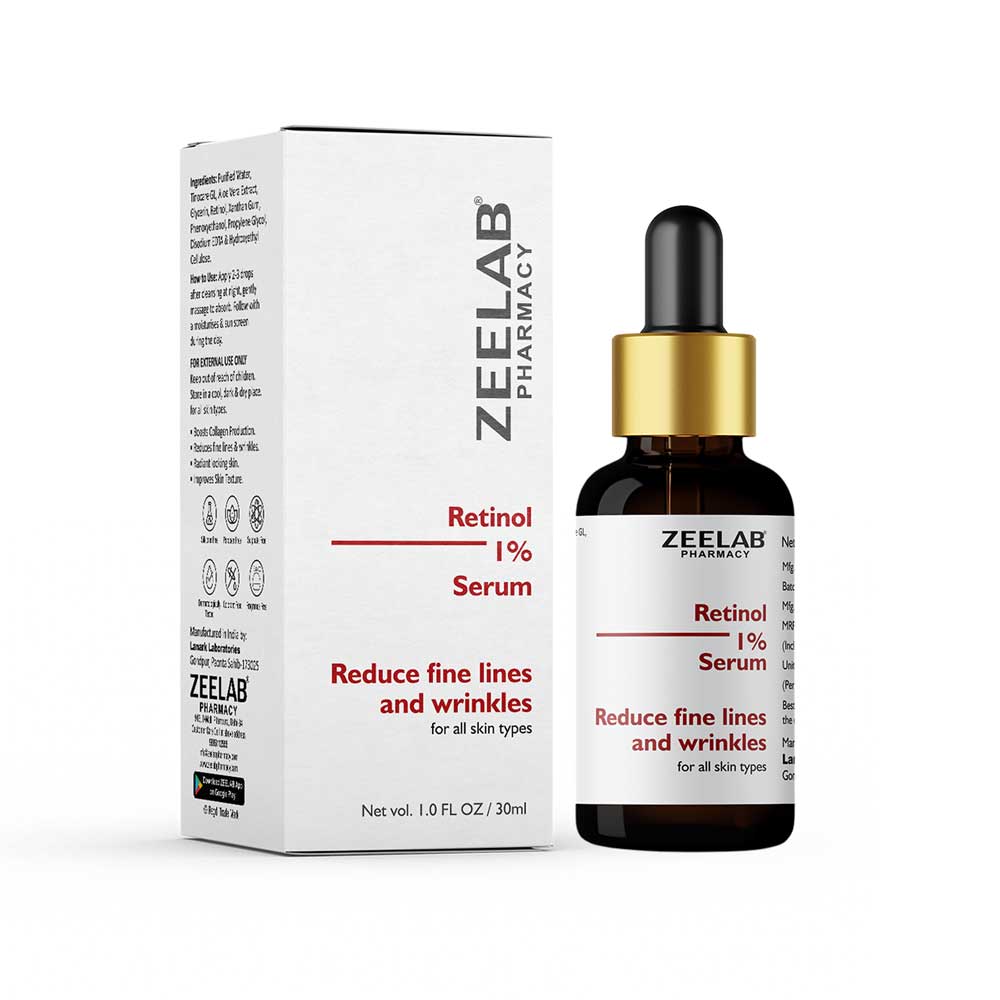
Zeelab Retinol 1% Face Serum
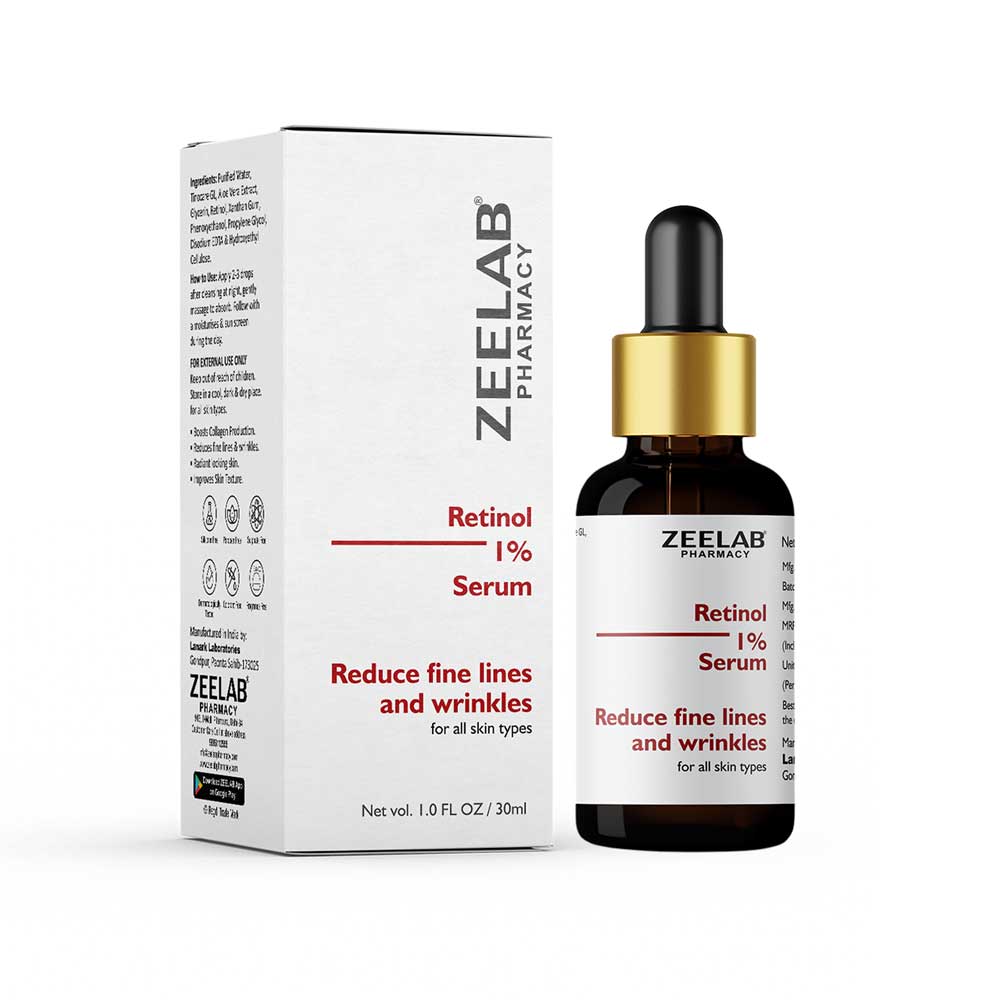
Zeelab Retinol 1% Face Serum contains a Vitamin A derivative that supports skin renewal and collagen production. Retinol is used for improving texture, reducing wrinkles, controlling acne, and promoting clearer, healthier-looking skin with regular use.
- Composition: Retinol 1%
- Benefits: Enhances texture, lessens lines and wrinkles, nourishes collagen, helps regulate acne, and supports visible clarity of the skin.
- How to use: Apply a pea-sized amount on dry skin at night, followed by moisturiser.
- Who should buy: Buy retinol serum online at Zeelab, as it is ideal for beginners with fine lines, acne marks, or uneven skin texture.
What to Expect When Starting Retinol (Week-by-Week Timeline)
When starting retinol, it is normal for the skin to go through an adjustment phase. During the first few weeks, you may notice mild dryness, redness, or slight peeling as your skin adapts to faster cell turnover. This process is sometimes referred to as the ‘retinol purge,’ because existing clogged pores start rising to the surface of the skin faster than they would otherwise.
|
Timeline |
What to Expect |
|
Week 1–2 |
Mild dryness, slight peeling, and skin adjustment phase |
|
Week 3–6 |
Skin begins adapting; texture may start to feel smoother |
|
Week 8–12 and beyond |
Visible improvement in skin clarity, tone, and overall appearance |
Common Side Effects of Retinol
Retinol is safe to use when used properly; however, as a beginner, one might experience minor side effects as the skin adjusts to the new product.
- Dryness and Flaking: There may be some dryness and peeling of the skin.
- Mild Redness: Mild redness is normally present during the adjusting phase.
- Skin Irritation: Some individuals may feel a slight burning sensation.
- Tight or uncomfortable feeling: This can happen as a result of skin adaptation.
- Increased sensitivity to the sun: The skin becomes more vulnerable to the effects of the sun without proper protection.
Retinol Mistakes Beginners Must Avoid
Understanding the proper use of retinol is essential for beginners to achieve safe and effective results. With the right approach, retinol can support smoother, clearer, and healthier-looking skin while minimising irritation and improving overall tolerance over time.
- Using too much retinol: A pea-sized amount is enough for the whole face.
- Skipping patch test: Always test on a small area before full use.
- Mixing with strong actives: Avoid AHA, BHA, and Vitamin C initially.
- Starting too often: Begin with 2-3 times per week, not daily.
- Not using sunscreen: Sun protection is essential when using retinol.
- Applying to damp skin: Always apply retinol to completely dry skin.
Retinol for Different Skin Concerns
Retinol can help address multiple skin concerns by supporting cell renewal and improving overall skin quality. Its benefits may vary depending on your skin type and concern.
|
Skin Concern |
How Retinol Helps |
|
Helps unclog pores, reduce breakouts, and support clearer skin over time. |
|
|
Supports balanced oil production and improves overall skin texture. |
|
|
Retinol for dry or sensitive skin |
Low-strength or encapsulated retinol can improve texture when used with proper moisturisation. |
|
Promotes cell turnover, helping improve uneven tone and dark spots gradually. |
Retinol Myths vs Facts
Proper retinol use for skin can help improve texture, clarity, and overall appearance when introduced correctly. Understanding how it works and following beginner-friendly practices can help achieve better results while minimising irritation and discomfort.
|
Myth |
Fact |
|
Retinol is only for ageing skin |
Retinol also helps with acne, uneven texture, and dull-looking skin. |
|
Retinol gives instant results |
Results take time and require consistent, long-term use. |
|
Retinol should be used daily from the start |
Beginners should start slowly to allow the skin to adjust. |
|
Retinol thins the skin. |
Retinol supports collagen production and helps improve skin strength over time. |
|
You don’t need sunscreen if you use retinol at night |
Retinol increases sun sensitivity, making daily sunscreen essential. |
Conclusion
Understanding what retinol is and how to use it correctly can make a significant difference in your skincare journey. With proper guidance, beginners can safely explore the many retinol uses, from improving skin texture to supporting clearer and more even-looking skin.
The key is to start slowly, stay consistent, and protect your skin with daily sunscreen. While results take time, the long-term benefits of using retinol can help promote healthier, smoother, and more refined skin.
With patience and the right routine, retinol can become a valuable part of maintaining overall skin health.
Frequently Asked Questions
Q. How is retinol good for the skin?
A. Retinol boosts cell turnover and collagen production, helping smooth texture, reduce fine lines, and improve Retinol for Pores by keeping pores clear for a more even-looking complexion.
Q. Can beginners use retinol every day?
A. No, beginners should not use retinol daily at first. Start slowly with a few applications per week. Daily use may cause irritation, dryness, or redness before the skin builds proper tolerance.
Q. As a beginner, how often should I use retinol?
A. As a beginner, you should use retinol 1–2 times per week initially. This allows your skin to adjust gradually. Frequency can be increased slowly once your skin builds tolerance without irritation or discomfort.
Q. At what age should you start using retinol?
A. You can start using retinol in your mid-20s, when natural collagen production begins to decline. Early use helps maintain smoother skin, improve texture, and support long-term skin health with proper and consistent application.
Q. How long does retinol take to show results?
A. Retinol results typically appear after 8-12 weeks of consistent use. Early improvements include smoother texture, while long-term use helps reduce fine lines, acne, and uneven skin tone gradually.
Q. What strength of retinol is best for beginners?
A. Beginners should choose low-strength retinol between 0.1% and 0.3%. These concentrations help the skin adjust safely while still improving texture, clarity, and overall skin appearance with gradual and consistent use.
Q. What is the sandwich method in retinol use?
A. The sandwich method involves applying moisturiser before and after retinol. This helps reduce irritation, improve comfort, and makes retinol easier to tolerate for beginners.
Q. Can I stop retinol once my skin improves?
A. Yes, you can stop retinol, but the benefits may gradually reduce over time. Continued use helps maintain skin texture, clarity, and smoothness, as retinol supports ongoing skin renewal and collagen production.
Q. Is it safe to use retinol around the eyes?
A. Yes, retinol can be used around the eyes carefully. Choose gentle formulations, apply a small amount, and avoid direct contact with the eyes. This helps improve fine lines while minimising irritation or sensitivity.
Q. Can people with sensitive skin use retinol?
A. Yes, Retinol for Sensitive Skin can be used safely by starting with a low strength (0.1%–0.3%) and applying moisturiser to reduce irritation. Gradual use helps improve tolerance and minimise redness or dryness.
Q. Can Retinol Be Used With Vitamin C?
A. Yes, retinol and Vitamin C can be used in the same routine, but not at the same time initially. Use Vitamin C in the morning and retinol at night to reduce irritation risk.
Q. Can Retinol Be Used With Niacinamide?
A. Yes, retinol can be safely used with niacinamide. Niacinamide helps soothe the skin, reduce irritation, and support the skin barrier, making retinol easier to tolerate, especially for beginners and sensitive skin types.
Q. Is Retinol Safe for Daily Use?
A. Retinol can be safe for daily use once your skin builds tolerance. Beginners should start slowly and increase frequency gradually. Daily use too early may cause dryness, irritation, or discomfort during adjustment.
Recent Blogs





Disclaimer : Zeelab Pharmacy provides health information for knowledge only. Do not self-medicate. Always consult a qualified doctor before starting, stopping, or changing any medicine or treatment.
Related Products


₹ 0
0
Items added
Quick Links
Categories
Our Policies

Our Socials


Subscribe

2026 Copyright By © Zeelab Pharmacy Private Limited. All Rights Reserved
Our Payment Partners

 Added!